How it works
Fifty cameras. One continuous take.
The Argus is built from 50 Z CAM E2 4K cine cameras, each recording continuous, pixel-synced video. Every camera captures the exact same moment, frame for frame, streamed live to a central server. Nothing is locked when you shoot. The moment, the timing and the movement through the array are all chosen afterwards: freeze it, ramp it, reverse it, or move through time in any non-linear way the edit needs.
One rig, every output
Static and moving 3D, from a single capture
Because the Argus records video, a single extracted frame gives you the same frozen-moment stills, photogrammetry and 3D you’d get from a dedicated stills rig, and a sequence of frames adds moving, volumetric capture on top. It does everything a DSLR array does, and more. One rig covers both.
- • Bullet time / time slice
- • Photogrammetry
- • 3D Gaussian Splatting (3DGS)
- • 4D Gaussian Splatting (4DGS)
- • Volumetric / moving 3D capture
If the Argus is already on your set, you don’t need to bring in a separate photogrammetry or 3D company. The rig already does it. Tell us the outputs you need and we’ll configure for them.
On-set control
Your video village sees exactly what the array sees
The Argus ships with a full director’s monitor system. Output runs to a properly colour-calibrated director’s monitor, not a laptop, and into the video village, so the whole crew watches in real time. It doubles as a live view of every camera in the array, so directors can confirm actor positions, props and framing before a take. The rig works inside your normal set workflow, not as a separate black box.
Why directors choose it
Silent, post-timed, and built for the unrepeatable
Because it’s silent, the Argus works around wildlife, animals and sound-sensitive sets where a mechanical shutter can’t. And because the timing is chosen in post, it’s made for the one-off and the unpredictable: the moment you can’t ask the talent to repeat.
Firing patterns
Every pattern is built by hand
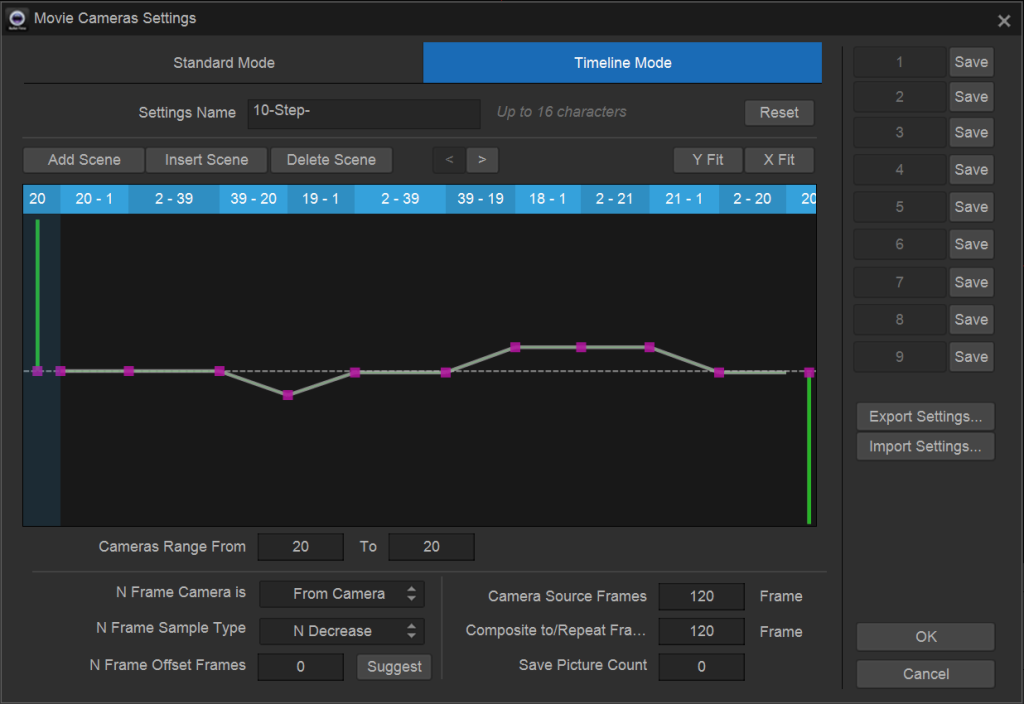
The Argus records one synchronised take from every camera. The pattern decides how those frames are stitched: which camera, which frame, in which order. Every pattern is hand built around your shot, so there is no fixed menu: we make as many patterns as the job needs, and the same recording can produce completely different shots each time. The four below are common starting points, worked out with you before the shoot and refined during and after, because the timing lives in post, not on set.
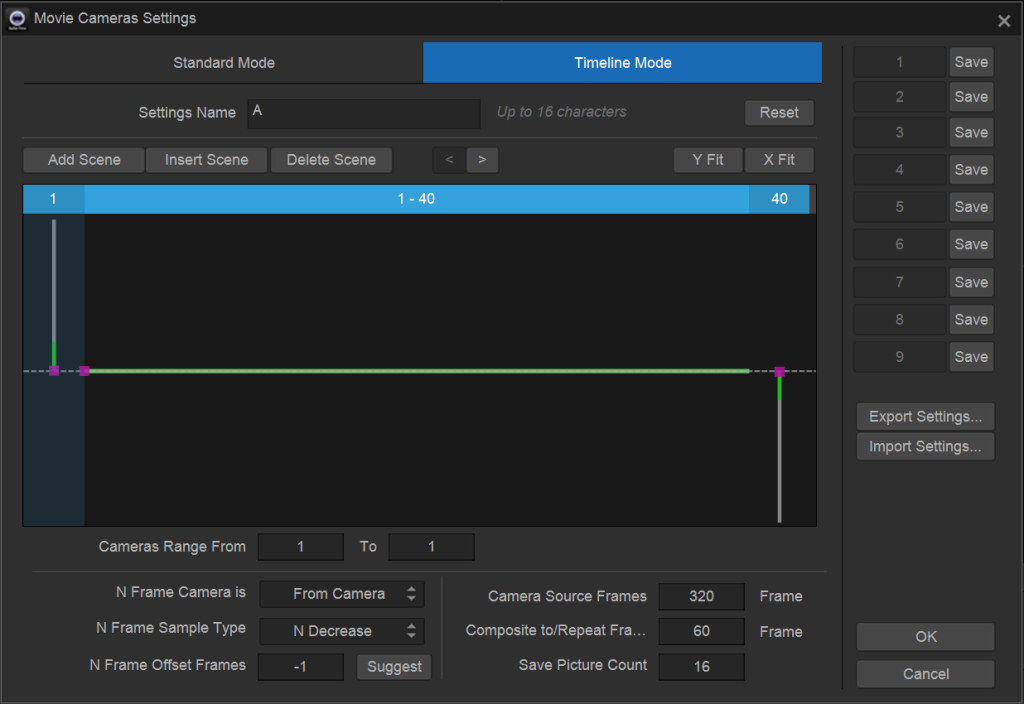
Static
Every camera shows the exact same instant, so the view glides around a frozen moment. This is the purest form of bullet time. A slow motion lead in and lead out, recorded at up to 240fps from any camera, lets the freeze rise out of real time and dissolve back into it.
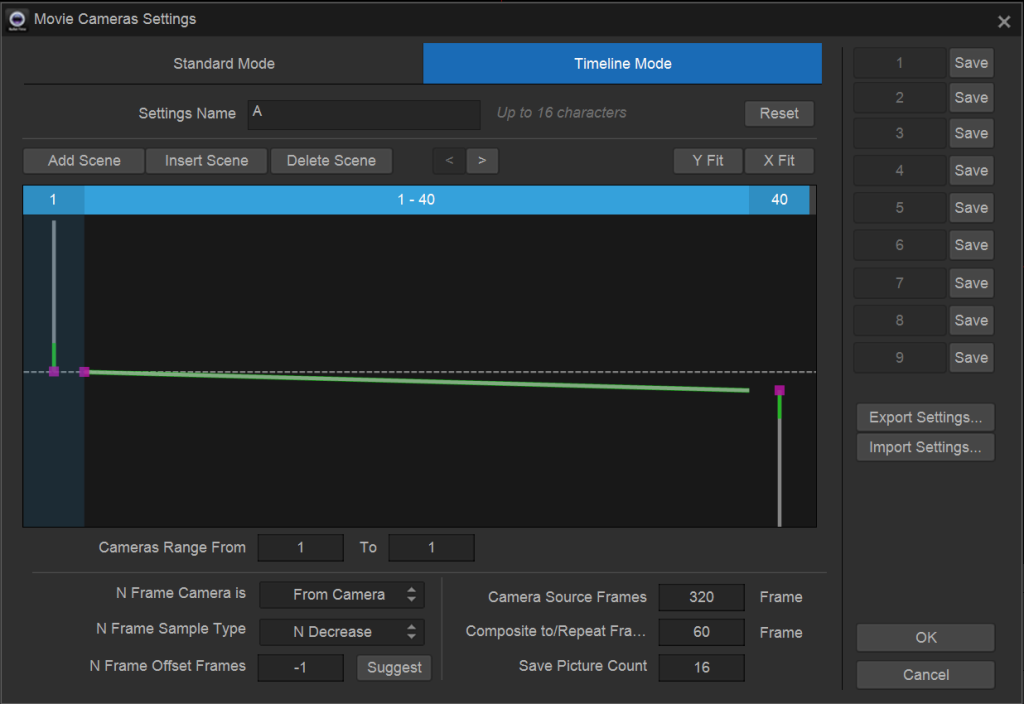
Sequential
Cameras step through time as the view moves along the array, with increments as fine as 1/240th of a second between neighbours. The subject keeps moving while the viewpoint sweeps around them, like a dolly move with nothing moving on set.
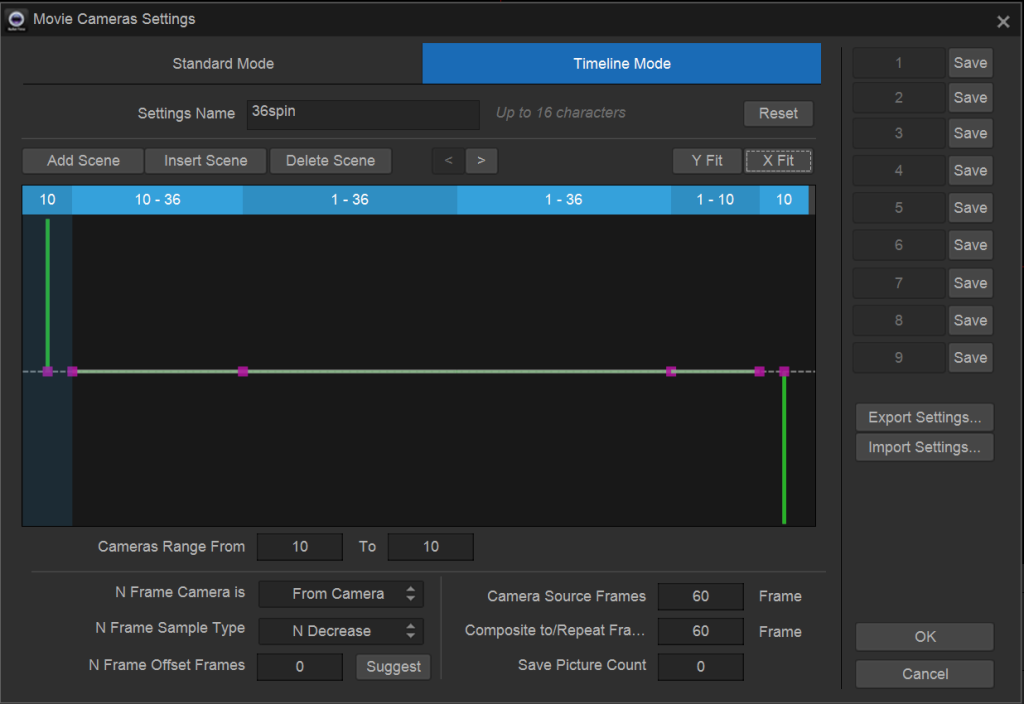
360 spin
Built as a full circle, all 50 cameras orbit the subject continuously, running around the ring and looping with no visible join. The spin can be static, sequential or custom, moving forwards and backwards through time as it goes.
Custom
Frames can be programmed to jump, pause or reverse at any point in time and anywhere on the array, building stuttering rhythms or carefully placed accents that pull the eye to a gesture or an impact. We build the pattern with you around the action.
Tech specs
Technical specifications
| Cameras | 50 Z CAM E2 cine cameras (Micro Four Thirds) |
|---|---|
| Lens | Olympus Pro 12-40mm F2.8 (24 to 80mm equivalent) |
| Sensor | 4/3″ Micro Four Thirds, 13 to 15 stops dynamic range |
| Resolution & frame rates | 120fps at C4K (4096×2160) and 4K (3840×2160); 240fps at 2K (1920×1080) |
| Colour | 10-bit (H.265) |
| Sync | 0.1ms accuracy, frame for frame across all cameras |
| Capture method | Continuous synchronised video, the moment chosen in post |
| Records to | 150Mbps MP4 or MOV (H.265 or H.264); 300Mbps to cards when no on-set preview is needed |
| Delivers | TIFF sequence or ProRes (bullet time and video); OBJ or Gaussian Splatting file (3D, 4D and volumetric) |
| Modularity | Click-together modules of 8, any physical shape |
| Setup time | About 1.5 to 4 hours |
| Power | About 800W from a standard 240V 13A socket |
| Crew | Two-person team sets up and runs the rig |
| Pricing | Per camera, per day |
Built and run by us
Any shape. Two-person crew. Per camera, per day.
The cameras build into click-together blocks of eight, so the array takes almost any physical shape: a line, an arc, a full circle, or wrapped to fit your set. We design, build and operate the rig ourselves, and a two-person crew sets up and runs the whole thing. Pricing is simple: your brief sets the camera count, and the camera count sets the price.
Proof