
Time slice and bullet time are two names for the same effect: time and camera movement come apart, so the scene can freeze, or crawl, while the viewpoint keeps travelling through it.
What the Effect Actually Is
Picture a camera moving along a dolly track with time frozen. The scene it passes through is completely still, yet the camera keeps travelling. That is what an array of still cameras produces when every camera fires at precisely the same instant: a slice of time, seen from many angles, played back as movement. The technique is generically called the time slice effect. The name bullet time came later, coined for The Matrix, where it showed the path of a bullet.
Who Invented It
Eadweard Muybridge, in the 1880s. His multi camera studies captured the same instant from several angles more than a century before digital arrays existed. Later productions used newer cameras, and the technique got new names, but the idea is his.
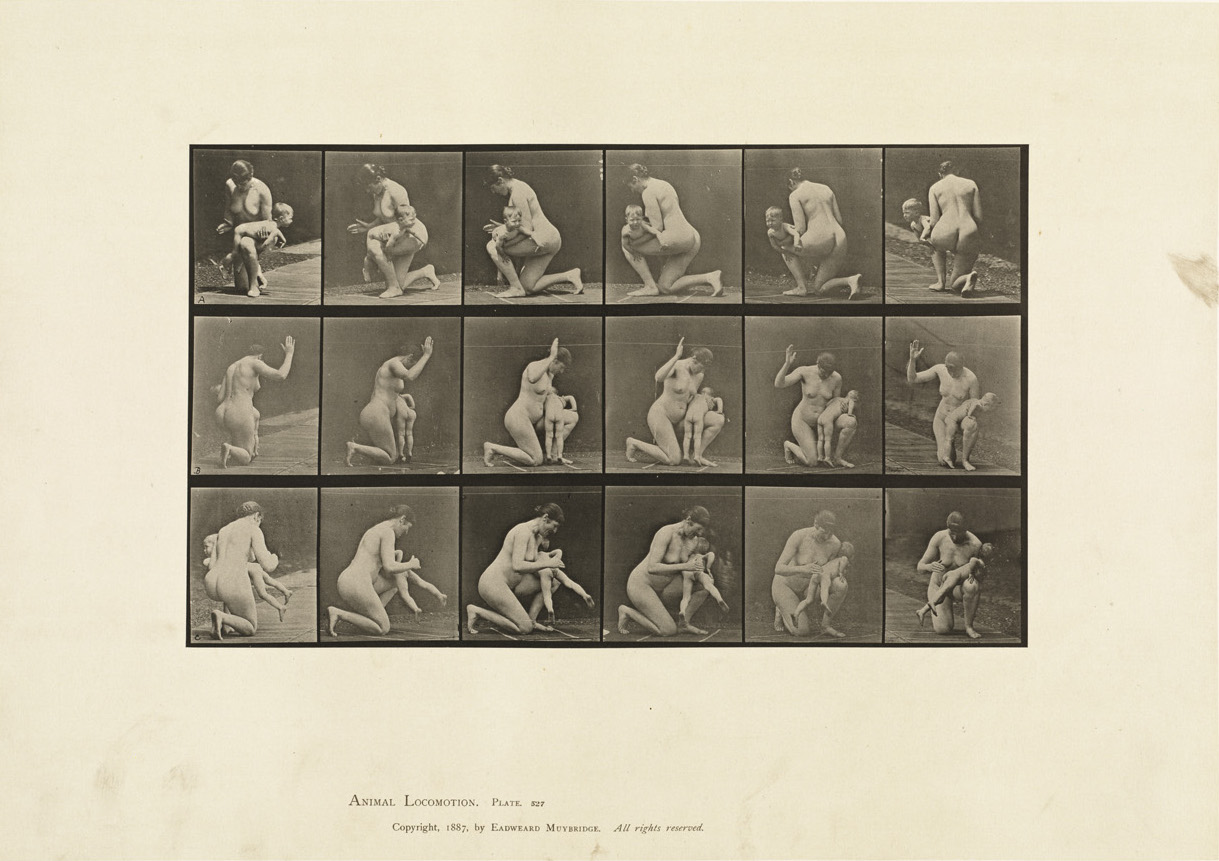
Eadweard Muybridge, Animal Locomotion, Plate 527, 1887. Boston Public Library. The same moment captured from multiple angles around the subject.
There is more on the history in who invented bullet time and bullet time movies before The Matrix.
Beyond the Freeze: Sequential and Ramped Time
Firing every camera at once is only the starting point. Fire them one after another, like falling dominoes, and the subject keeps moving as the viewpoint travels; that is a sequential time slice. Vary the gaps between cameras along the way and the speed of time itself ramps up and down mid shot, a slow motion camera on a dolly that can accelerate and brake while it travels; that is a ramped time slice. Our trigger system plots all of this per camera, in one millisecond steps.
Shooting It Today
We have built and operated time slice rigs since 2001, from 12 camera event arcs to 240 camera production arrays, plus the Argus Rig, which records the effect on 50 synchronised cine cameras and lets the timing be chosen in post. Our bullet time services cover the rigs, triggers and crew, or contact us about a shot.